Post-Construction Cleaning
The work that appears the moment a build or renovation ends is really two jobs: first the debris and coarse dirt, then the fine dust that has settled on every surface. Trying to do both in one pass is how you end up back in dust two days later.
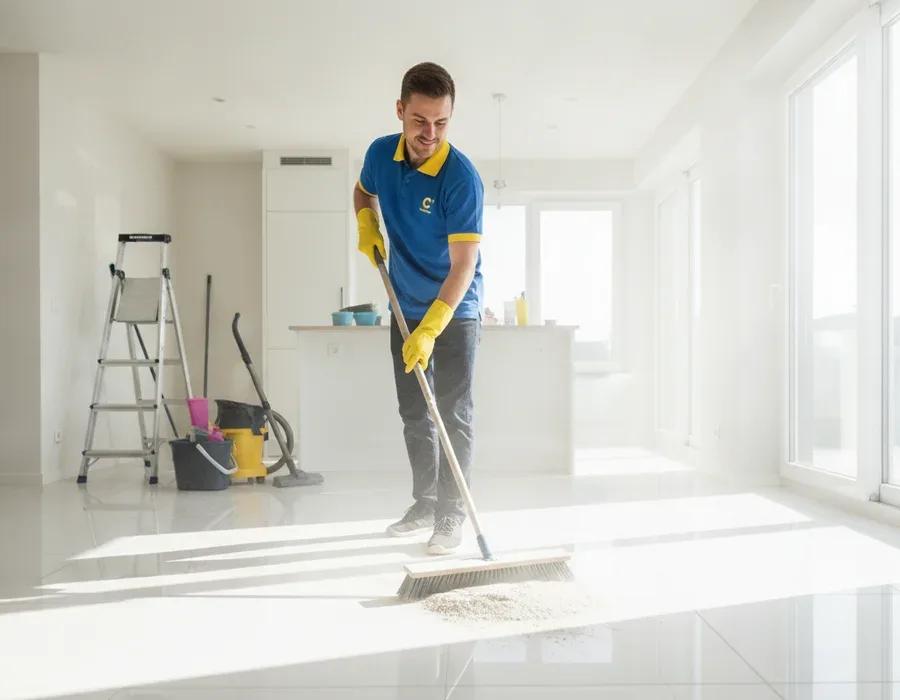
In the rough stage we clear the debris, packaging, plaster and mortar left behind, then sweep and give the floors a first wash. The point of this stage is not to hand the place over — it is to make the fine clean possible. Moving on to detail while dust is still airborne means wiping the same surface twice, so we deliberately wait between the two stages.
The fine stage runs top to bottom: ceiling edges and downlight housings, door tops and frame profiles, window casings and shutter slats, socket and switch surrounds, and the floor last. Behind radiators and between their fins is the most commonly skipped spot after building work — fine dust settles there and blows back into the room the first time the heating goes on.
Paint splatter, silicone and label residue on glass is a separate job. We take them off with the right solvent at an angle that will not damage the pane, and on coated glass we use solvent and microfibre rather than a blade. The mortar film on ceramic tiles comes off the same way: a correctly diluted product, no scratching of the surface.
We walk through the property together before handover. The most common complaint after building work is dust reappearing days later from inside cupboards and air-conditioning grilles, which is why cupboard interiors, drawers and vents are separate items on our checklist.
Post-construction cleaning requests in Çanakkale come mainly from two places: new-build handovers in the centre and Kepez, and renovations of detached houses and villas out in the districts. In new blocks we schedule several flats back to back, so the crew and the equipment stay in the building all day and both the time and the cost come down. We run scheduled days for Çan, Biga, Gelibolu and Ezine — tell us your handover date in advance and we will hold a slot.
What's included?
- Removal of debris, packaging and site waste
- Rough sweeping and a first floor wash
- Ceiling edges, door tops and frame profiles
- Glass, frames and shutter slats
- Paint, silicone and label residue on glass
- Mortar film on tiles and floors
- Behind radiators, between fins and air vents
- Cupboard interiors, drawers and shelves
How it works
- 1SurveyWe walk the site, see what stage the work is at, and agree how many passes the job needs and what it covers.
- 2Rough CleanDebris, packaging and mortar residue are cleared; floors are swept and given a first wash.
- 3Letting Dust SettleWe wait for airborne dust to land — detail cleaning started too early simply has to be done twice.
- 4Fine CleanTop to bottom: ceiling edges, door tops, glass and frames, socket surrounds, and the floor last.
- 5Check and HandoverWe walk the checklist together, cupboard interiors and vents included, and fix anything missing the same day.
Frequently asked questions
How long does post-construction cleaning take?
The scope depends less on square metres than on what the work left behind. For an average flat, the rough and fine stages together take one to two working days; if painting, plastering and tiling all happened at once, it takes longer. We put the timing in writing after the survey.
When should we ask you to come?
After all painting, plastering, tiling and installation work is finished. Cleaning while trades are still working is wasted effort. The one exception is a larger site where an interim clean is wanted for the trades themselves, which we plan as a separate job.
Can it be done with furniture in place?
It can, but it is not ideal. If furniture is not covered, fine dust works into fabric and cupboard interiors. Where possible have the clean done before anything moves in; if not, cover the furniture beforehand — we can take that on as well.
Why does dust come back after cleaning?
Usually one of two reasons: the detail work started before airborne dust had settled, or cupboard interiors, air-conditioning grilles and the space behind radiators were skipped. We wait between stages and keep all three as separate checklist items.
Do paint and silicone marks come off the glass?
Most of them do. Paint splatter and silicone come off with the right solvent at the right angle. On coated glass we do not use a blade — solvent and microfibre only. If the pane is already scratched we note it during the survey and record it.
Do you do post-construction cleaning in the districts too?
Yes. The centre and Kepez are covered within the same week; Çan, Biga, Gelibolu, Ezine and Ayvacık have scheduled days. Gökçeada and Bozcaada need at least a week's notice, because the ferry times and the crew's accommodation have to be arranged.
On-site survey, written price
We do not guess a job over the phone. We come, we look, and we put the scope and the price in writing. The survey is free.