The streak is not the glass — it is what your water left behind
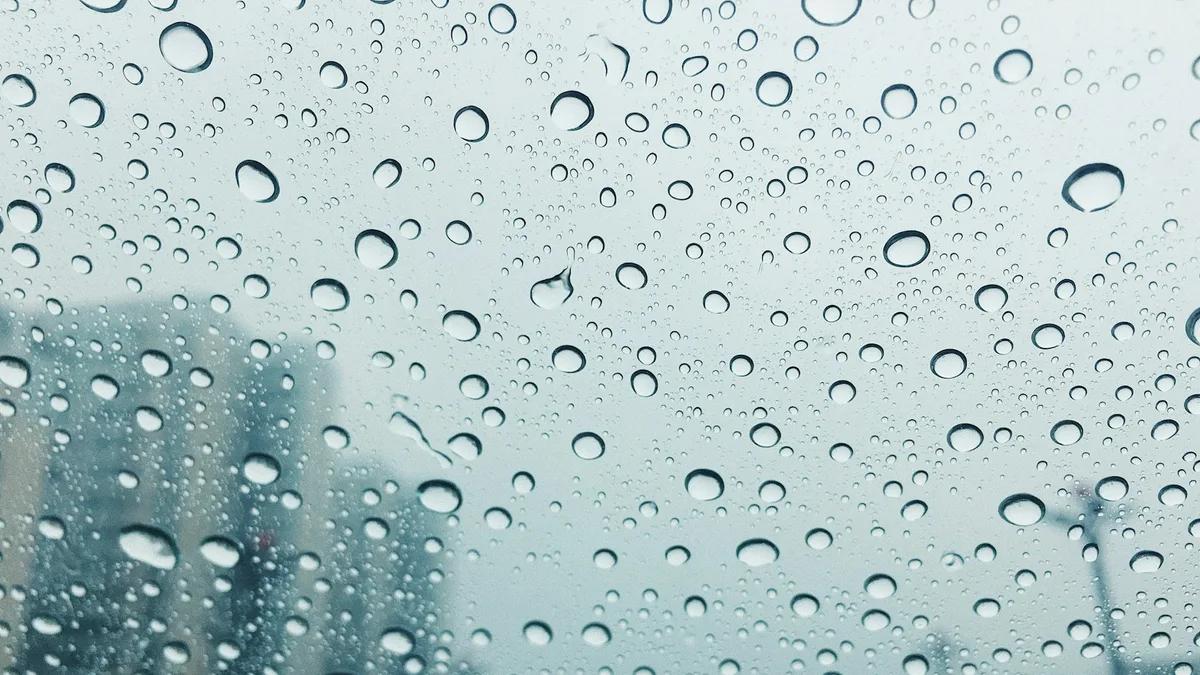
Mains water is never pure. It carries dissolved calcium and magnesium salts, some silica and a mix of other minerals that varies from one supply to the next. The water evaporates; the minerals do not. Because concentration is highest at the edge of a drying droplet, the mark usually appears as a faint ring. Those pale circles on your glass are essentially a chemical fingerprint of your tap water.
The second culprit is detergent. Surfactants lift dirt well, but any that stays on the glass dries into a thin, slightly tacky layer. That layer holds dust, so within two or three days the window looks dull again and you find yourself saying you only cleaned it last week. The third factor is timing: on warm glass in direct sun the water dries before you can pull the squeegee through, locking both minerals and detergent exactly where they sat.
In Çanakkale you also deal with wind and sea salt
Along the strait the wind rarely stops, and it works on your glass in two ways. First, what it carries: dust, pollen, dry soil and — near the shore — a fine load of salt. Seafront elevations around Güzelyalı, Kepez and İntepe get the worst of it. Salt is hygroscopic, meaning it pulls moisture out of the air, so the morning dew alone is enough to cloud a window again. Coastal glass really does get dirty faster; it is not your imagination.
The wind's second effect shows up while you are working. Moving air dries the pane far quicker than still air, so the thin film left behind the squeegee evaporates before your next pass and you are left with hard lines. Hard water has a waiting problem too: mineral deposits left on glass for long periods can gradually dull the surface itself, and at that stage no amount of wiping brings the clarity back. Postponing a seafront facade for months can cost you more than the cleaning would have.
Why pure water leaves nothing behind
Pure water is simply water stripped of its minerals. In professional systems it passes through pre-filters, then a reverse-osmosis membrane, and any remaining ions are captured by deionising resin. Dissolved content is measured in ppm; mains water can sit at several hundred ppm depending on the supply, while the water leaving the system is close to zero. The logic is as simple as it sounds — if there is nothing dissolved in the water, there is nothing left on the glass when it dries.
There is a second benefit. Water that is 'empty' of minerals tends to dissolve and carry away what it touches, which is why no detergent is needed — and with no detergent, there is no film. Pure water is not magic, though. Dried mud, bird droppings, silicone residue and paint splatter from a renovation all have to be released mechanically first. The water rinses; the brush, and where necessary a proper blade, does the removing.
How the telescopic brush system changes the job
The backbone of the system is a carbon-fibre telescopic pole with a soft-bristle brush on the end and a hose running inside it. Pure water is fed through jets above the brush, the bristles loosen the dirt, and the flow carries it down the pane. Depending on the equipment and the ground conditions, four to five storeys from street level is a realistic working range; anything above that needs a different access plan. The real gain is safety: nobody leans out of a balcony, sits on a sill or waits for scaffolding to go up.
Sequence matters as much as equipment. Frames, casings and shutter channels are washed first, because the grime collecting there will otherwise run straight down over glass you have already cleaned. The pane is then brushed from top to bottom, with edges and corners rinsed generously. Finally the glass is left wet and allowed to dry on its own — the part that surprises people the first time they see it. Since nothing touches the surface afterwards, there are no lint marks, no squeegee lines and no fingerprints.
Vinegar, newspaper and the mistakes almost everyone makes
The newspaper trick genuinely worked once. Older newsprint was densely woven and left no lint; today's paper disintegrates when wet and the ink can transfer onto white PVC frames. Vinegar, on the other hand, does something real — acetic acid dissolves limescale, and on light, recent deposits it is a reasonable home fix. Just keep it away from marble and natural-stone sills, some seals and painted surfaces, and always rinse afterwards with clean water.
The mistakes repeat themselves from house to house. Cleaning at midday on sun-warmed glass, so the water dries before you finish. Using too much detergent, on the assumption that more foam means more clean — it only means more residue. Wiping the frame and then the glass with the same cloth, which carries the dirt straight onto the pane. Scraping paint off dry glass with a blade, which scratches; a blade belongs only on a wet surface, held at a very shallow angle. Do the opposite: work early or in shade, cut the soap right back, use two microfibres (one damp, one dry), wipe the squeegee rubber after every pass and bin any blade that has nicked.
How often to clean it — and where to hand it over
For interior glass, a proper clean every three to four months is enough in most homes. Seafront elevations, ground-floor shop windows and busy entrance doors need far more; monthly is a realistic interval there. Do not look only at the pane, either: if the seals, shutter channels and the drainage holes in the frame get blocked, rainwater sits and then runs dirty straight down the glass. Clearing those holes once a year does more good than cleaning the window twice.
There is plenty here you can handle yourself; the limit usually starts with height, facade size and stubborn residue. At Derin Temizlik we run pure-water systems for window and facade work across Çanakkale centre, Kepez and the districts, and on tall elevations we prefer the safer telescopic method to rope access — post-construction paint and silicone residue we plan as a separate stage of its own. If your glass needs to be seen before anything is promised, get in touch and we will come and look.
Frequently asked questions
What is pure water, and can I make it at home?
Pure water is water stripped of its minerals through reverse osmosis and deionisation. On a very small scale distilled water gives a similar result, but given the volume a facade actually takes, it is not practical. Bottled drinking water will not help either — it still contains minerals, so it leaves the same marks when it dries.
The glass is left wet and never wiped. Does it really dry clear?
It does, because what causes streaks is not water itself but the minerals and detergent residue carried in it. With neither present, evaporation leaves nothing behind. The one thing that matters is a genuinely generous final rinse; dirty water left sitting on the pane will of course dry into a mark.
Do vinegar and newspaper actually work?
Vinegar works on light limescale, since acetic acid dissolves the deposit. Be careful around natural-stone sills, seals and painted surfaces, and rinse with clean water afterwards. Newspaper is a different story now: modern newsprint falls apart when wet and the ink can transfer onto white frames. A good microfibre cloth outperforms it easily.
Can limescale that has been there for years be removed?
Most recent, surface-level deposits come off with the right approach. Hard water left in place for a long time can dull the glass surface itself, and at that point cleaning may not restore full clarity. That is why seafront windows and panes hit by garden sprinklers are worth attending to before the marks settle in.
Can windows be cleaned on a windy or very sunny day?
Working the traditional way on sun-warmed glass practically guarantees streaks, so at home the early morning or a shaded elevation is the better choice. With the pure-water method fast drying is not a problem, since the glass is meant to dry on its own anyway. In strong wind, however, work on tall facades is postponed for safety reasons.