What routine cleaning actually handles
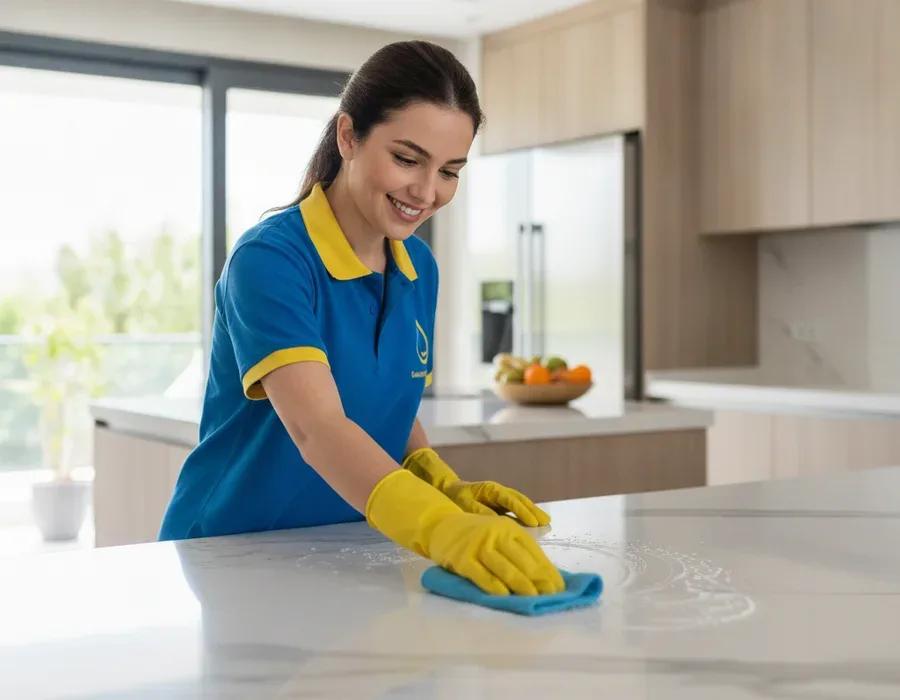
Weekly cleaning is maintenance work. Vacuuming, mopping, wiping worktops, taps, the toilet, bins and dust are all done to slow accumulation down. The goal is not to strip out existing soil but to stop new soil from settling in. Done consistently, a good routine genuinely stretches the gap between deep cleans and keeps the job smaller when it comes.
A cloth and detergent, though, only reach the fresh layer sitting on top. In porous materials such as tile grout, shower silicone, natural stone and fabric, soil travels downwards: you lift the surface layer and leave the rest where it is. A little more builds up every week, and six months later the grout has darkened by a shade that no ordinary cleaner brings back. That does not mean nobody cleans the house. It means the method has reached its limit.
Where deep cleaning actually goes
A deep clean list is made of everything the routine skips: tile grout and shower silicone, the oven cavity and the gap between the two panes of its door, the aluminium filter in the extractor hood, the back of the fridge and the folds of its door seal, the washing machine gasket and the detergent drawer. Add the tops of cabinets, the floor under furniture, the gaps between radiator fins, door frames and the indoor unit filter of the air conditioner. Textiles are a chapter of their own — mattresses, sofas, carpets and curtains hold most of the dust, sweat and mites in a home. What all of these share is that hands and cloths either cannot reach them or achieve nothing when they do.
The real difference is method, not effort. Dry steam produced at boiler temperatures around 150 °C softens the soil inside the pore and pushes it back out, so you are not grinding at it. On fabric, an injection-extraction machine does the work: solution goes in under pressure and is vacuumed straight back, carrying the dirt out with the water. In a ventilated room the fabric dries in four to six hours. Scrubbing with a cloth usually spreads soil around; working with machines removes it from the room.
The signs a home is asking for it
Smell is the clearest signal. If the same odour returns a few hours after cleaning, the source is not the surface you wiped — it is in the textiles, the drain, the extractor filter or the air conditioning unit. Grey-black lines in shower grout and black speckles along the silicone edge mean moisture has settled in for good. And if the kitchen cabinet door feels slightly tacky under your finger, that film is cooking vapour mixed with unrinsed detergent, and it pulls dust straight onto itself.
The second set of signs is physical. Waking up with a blocked nose, or sneezing and itchy eyes shortly after lying down, usually points to bed textiles and dust mites. A faintly sweet, damp smell rising when you sit on the sofa is the same kind of warning. Along the Çanakkale coast — the Güzelyalı and Dardanos stretch, or the sea-facing blocks in Kepez — humidity runs high, so these signs appear sooner. The fine dust that collects in window frames on windy days belongs to the same story.
How often is a deep clean needed?
For a standard family home, twice a year covers most situations: once with the spring clean, once before the heating season starts in autumn. It makes sense to schedule carpet, sofa and mattress washing on those same dates, since they dry and go back into use the same day. If there is a pet, an allergy sufferer, a crawling child or a smoker in the house, the interval drops to every three or four months. That is not caution for its own sake — it is simply how fast textiles and filters load up.
In rentals and seasonal homes the calendar follows the change of occupants: move-out and move-in cleaning. On the Ayvacık coast and on Bozcaada and Gökçeada, opening and closing the season are the two natural points, because a closed-up house collects damp odours and mould. Offices and businesses do well on a quarterly cycle for shared kitchens, restrooms and AC filters. After a renovation, nothing waits for a date: fine cement dust stays airborne for days and keeps landing again, which is why the work is done in two stages, rough first and fine afterwards.
Common mistakes and what not to do
The dangerous one is mixing products. Pouring hydrochloric acid or an acidic descaler onto bleach releases chlorine gas, and in a closed bathroom that is a real poisoning risk. The second common mistake is pouring bleach onto grout: it lightens the colour but does not lift what is inside the pore, so it hides the stain rather than removing it. The third is using too much detergent — the film left on an unrinsed surface glues dust and grease to itself, and the room looks dirtier within a week. Less product, the right dwell time and proper rinsing always beat more product and a quick wipe.
On the disinfection side, the most common error is spraying disinfectant straight onto a dirty surface. Organic soil binds the active ingredient and blunts it, so the correct order is clean first, disinfect second. Wiping the product off before the contact time stated on the label has the same effect. With textiles, soaking a carpet and scrubbing it with something that has no extraction is a frequent error: water reaches the backing, drying drags on and you are left with odour and yellow rings at the edges. Applying steam to every surface is a mistake too — laminate seams, unsealed wood and some glued finishes suffer from heat and moisture, so always test in a hidden corner first.
Where your work ends and a crew starts
There is plenty you can do yourself that genuinely moves the needle. Take out the aluminium extractor filter and soak it in hot water with bicarbonate, run an old toothbrush through the folds of the fridge door seal, dry the washing machine gasket after every cycle and leave the door ajar, pull out the detergent drawer and wash it, squeegee the water off the glass and tiles after a shower, and rinse the front filter of a split air conditioner once a month. All of these cut moisture and grease off at the source, which is exactly what lengthens the interval between deep cleans.
The rest is a different job with different tools: opening grout and silicone with steam, choosing the right solution and calculating drying time for sofas, carpets and mattresses, dismantling an oven door to clean between its panes, reaching the fan and heat exchanger inside an AC unit, glass and facades on upper floors, and post-renovation fine dust with paint or silicone residue on glass. At Derin Temizlik this is precisely the work we do across central Çanakkale, Kepez and the districts — during the survey we agree which area is cleaned with which method, then work in order from the dirtiest zone to the cleanest. Keep the routine yourself, and get in touch when the machine work needs discussing.
Frequently asked questions
How long does a deep clean take?
Scope decides the duration, not square metres. With a two-person crew, a standard flat focused on the kitchen and bathrooms is finished within the day. Add the oven, the extractor filter, the insides of cabinets and textile washing and it can run past a single day, which is why we pin the scope down during the survey.
Do I need to be at home during the work?
It is not required, but being there at the start and at handover makes things easier. Clearing away valuables, documents and small decorative pieces beforehand is preparation enough. If you have pets, keeping them in a separate room is safer given the noise of the machines and the wet floors.
Can steam be used on any surface?
No. Steam means heat and moisture, so laminate seams, unsealed wood, glued finishes and some adhesive-fixed trims can be damaged by it. On ceramic, tiles, grout, glass, steel and most solid surfaces it is the most effective method available. Where a surface is questionable, we test in a hidden spot before going any further.
Are deep cleaning and disinfection the same thing?
They are not the same, but they complete each other. Cleaning removes soil, grease and organic residue from the surface; disinfection then targets the microbial load left behind. The correct order is always cleaning first, disinfection second. ULV fogging produces droplets small enough to disperse without wetting surfaces or leaving a film.
When should a home be deep cleaned before moving in?
The most productive moment is while the property is still empty, before the furniture arrives. In an empty home the insides of cabinets, the floor under future furniture, the balcony and the window frames are all reachable, whereas doing the same work later takes longer and stays incomplete. If there has been a renovation, wait until the rough debris is out and then handle the fine dust stage.